
How narcs turned cannabis into “marijuana”
Assembly instructions
A book about drug policy,
assembled for the general public.
No cannabis in the box.

From natural cannabis to “marijuana”
A social, political, and media construction.

Assembly time
A century

US arrests
About 30 million

1

Before you begin
- This product is not natural.
- It was designed.
- It was financed.
- It was sold.
- And it is still being sold.
Tools required
 Illicit money
 Propaganda
 Tailor-made laws
 Corruption
 Media
 Disinformation
2
Assembly steps
-
Step 1: Take an
ancient plant.Used medicinally, spiritually, and industrially for thousands of years.
Book, ch. 151937: Washington all but bans marijuana. 1942: a USDA film, Hemp for Victory, tells farmers to grow the same plant.
-
Step 2: Change
the name.Associate it with foreign and threatening words. Language shapes fear.
Book, ch. 1, 61925: The New York Times calls it marihuana, Mexican hashish. Later, federal narcotics chief Harry Anslinger’s files link it to Mexicans, Black people and jazz musicians.
3
-
Step 3: Invent a threat.
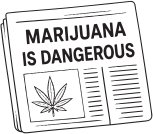
Create false headlines, biased studies, and paid testimonies.
Book, ch. 3January 2025: a DEA bulletin warns cannabis is 15 times more potent than at Woodstock. It cites no lab test. The author asks: where is the Woodstock test?
-
Step 4: Criminalize selectively.

Pass laws to imprison some and protect others.
Book, ch. 11December 1970: Nixon approves a narcotics badge for Elvis. August 1977: Elvis dies. One lab finds 14 drugs in his system. Published lists show no cannabis.
4
-
Step 5: Fund
the war.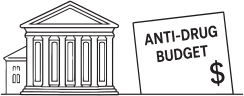
Divert millions to agencies, police, and prisons. The war generates profit.
Book, ch. 15The DEA’s eradication program funds police to pull up plants. Its 2004 tally: about 265 million destroyed, more than 262 million of them wild, untended “ditchweed.”
-
Step 6: Create a
black market.
What is outlawed does not disappear, it goes underground. Whoever controls illegality controls the money.
Book, prefaceThe author called this in 1986, in a National Review article titled “How the Narcs Created Crack”: tougher enforcement pushes the trade toward stronger, easier-to-hide drugs.
5
-
Step 7: Destroy
communities.
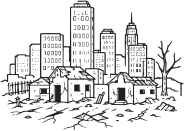
Break families, fill prisons, and perpetuate the cycle of poverty and violence.
Book, ch. 2Peter McWilliams, a bestselling author diagnosed with AIDS and cancer, said cannabis kept his medication down. Federal bail terms banned it, with his mother’s and brother’s homes at stake. He died in 2000, awaiting sentencing.
-
Step 8: Sell
the lie.
Repeat the message until the lie becomes accepted truth.
Book, ch. 17The author’s example: in October 2025, FoxNews.com says marijuana is “linked to 42% of deadly car crashes in Ohio.” The data: 246 dead drivers in one county. Chapter 17 asks who also had alcohol or other drugs.
6
 Final result: A multi-billion- dollar industry.


Cannabis was a plant.
“Marijuana” is a business.
And business, as always,
is controlled by a few.
2021: GW Pharmaceuticals, built on cannabis medicine, sold for about $7.2 billion. Federal law still listed marijuana as having no accepted medical use.
That’s the short version. The book has the full case for each step.
Notify me7
What’s in the box
- ×30,000,000
Arrests, give or take. But who’s counting?
- ×20
Chapters
- ×7
Rules every banned market follows
 ×8
Steps to take the ban apart
Parts list
- PrefaceWhy harder enforcement means harder drugs.
- LawsThe Laws of Contraband: seven things every banned market does.
- Ch. 1“Prohibition”: why nobody calls it that, and the 1925 story that already had the plot.
- Ch. 2You are under arrest: what the arrest numbers mean, with names attached.
- Ch. 3Potent pot and Woodstock: everyone says the weed was weaker. Who tested it?
- Ch. 4BC Bud: how US drug warriors made Canadian weed a menace, and built its brand.
- Ch. 5The Dutch experience: 50 years of coffeeshops against American claims about them.
- Ch. 6Countercultures: 420, the Cannabis Cup, and the identity the ban created.
- Ch. 7“Cartels”: how American demand and enforcement built the smuggling networks.
- Ch. 8Rescheduling: the commissions, doctors and DEA judge the coverage leaves out.
- Ch. 9Medical cannabis: the patients who forced the issue, and the agencies that stalled.
- Ch. 10The pediatric psychiatrist: what counts as medicine, and what counts as a crime.
- Ch. 11How Prohibition killed Elvis and is still killing his fans: the badge and the prescriptions.
- Ch. 12Politicized psychiatry: a medical degree is not expertise in who gets arrested.
- Ch. 13Big Prohibition: who funds the opposition.
- Ch. 14Crossing ethical lines: your tax dollars at work against legalization. Draws on published research by Diane Goldstein.
- Ch. 15Woody Harrelson vs. Kentucky: four hemp seeds, four years in court, and the war on hemp.
- Ch. 16The ABCs of CBD: from a 1940 lab find to a $7.2 billion sale.
- Ch. 17“Linked to 42%”: anatomy of a Fox News headline.
- Ch. 18The military: what it tolerates from alcohol, and what it punishes in cannabis.
- Ch. 19The Wall Street Journal: a reader of more than 60 years answers its editorials.
- Ch. 20The New York Times says America has a marijuana problem. The author has another name for it.
- LastWhere do we go from here: eight steps for taking it apart.
8
Troubleshooting
“Isn’t it basically legal now?”
As of 2026, adult use is still illegal in 26 states. FBI figures show more than 200,000 marijuana arrests in both 2024 and 2025.
Book, ch. 2, 5“Today’s weed is a different drug.”
Average potency did rise, mostly under Prohibition, which rewards whatever is compact and strong. And percentage isn’t dose: Chapter 3 looks at how people adjust.
Book, ch. 3“It’s a gateway drug.”
The book points at the illegal seller, who may also stock the harder drugs. The Dutch split those two markets on purpose.
Book, ch. 5, 7“It has no medical use.”
In 1988 the DEA’s own judge recommended rescheduling it. The DEA said no. In 2018 the FDA approved its first cannabis-derived drug, for two rare forms of epilepsy.
Book, ch. 8, 16“So you’re saying it’s harmless.”
No. Nothing is, and some people will have problems with it. The book asks what roughly 30 million arrests did about that.
Book, last chapter
9
Who wrote the instructions
Richard Clarence Cowan
Born in 1940. Went to Yale. More than 50 years in the marijuana reform movement. More than 60 years reading The Wall Street Journal, whose editorials he answers in Chapter 19. This book asks what he has been asking the whole time: why do people get arrested for this?
- 1972Attends the first conference of NORML, the National Organization for the Reform of Marijuana Laws.
- 1986“How the Narcs Created Crack” runs in National Review, the conservative magazine founded by William F. Buckley Jr.
- 1992Becomes national director of NORML.
“Governments can prohibit a plant. They cannot repeal botany.”
10
Do not assemble alone


11
It is not natural. It is political. It is business. It is time to dismantle it.
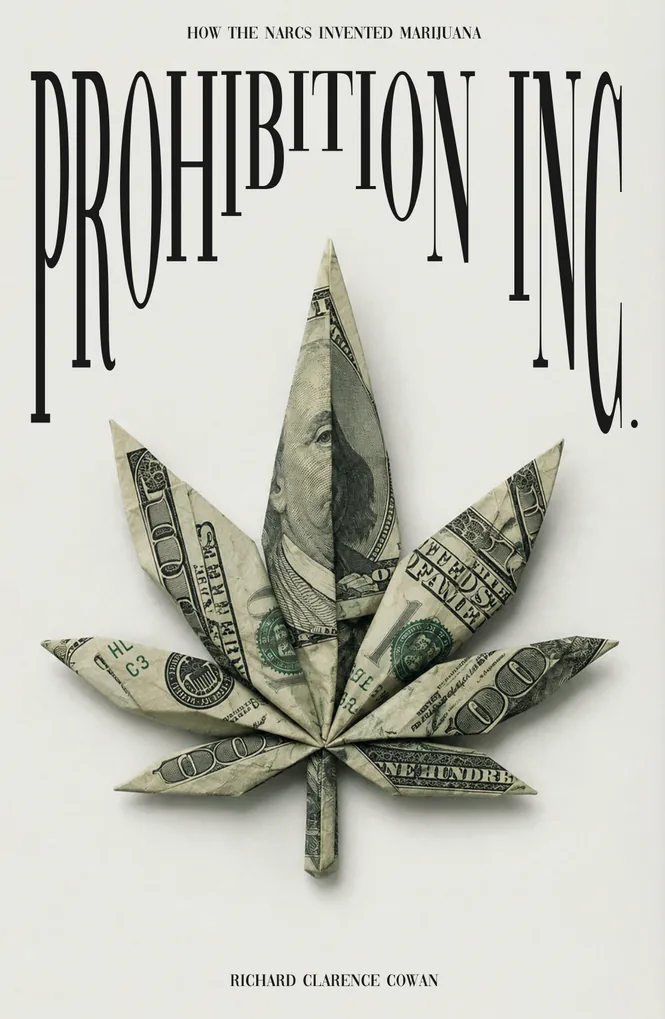
Prohibition Inc.
A century of a counterproductive fraud.
By Richard Clarence Cowan.
- Contents
- 20 chapters
- Includes
- Disassembly instructions
- Case no.
- 420 666 1969
This page has the 8 assembly steps. The book has the full case for each one, plus 8 steps for taking the ban apart.
Order the bookAssembly time
A century
People affected
Millions
Difficulty

12
The arguments are the author’s. No person, company or publication named on this page, other than the author, has endorsed this book.
Contact: cowan@fromcannabistomarijuana.com. Privacy notice.
Prohibition Inc. by Richard Clarence Cowan. A book about drug policy. No cannabis in the box.